


During the four centuries of activity of the Dogana di Foggia, transhumance represented one of the principal driving forces of the economy of the Kingdom of Naples and, later, of the Kingdom of the Two Sicilies. Each year, considerable capital accumulated in Foggia during the April Fair, a crucial hub of trade linked to transhumant pastoralism. In the previous pages, the main actors of this long historical experience have been discussed, with one significant exception: the shepherds.
It is essential to avoid a frequent terminological and conceptual confusion between locati and shepherds. The locati were the owners of the flocks, those who invested capital and derived profit from transhumance, despite the many difficulties already described. Shepherds, by contrast, were those who physically tended the sheep, entirely excluded from the flow of money that revolved around their labor. It is therefore impossible to conclude this account without giving due attention to those who, through their own hard work, sustained the institution of transhumance for centuries, earning barely enough for subsistence.
In the following section, I have attempted to reconstruct a typical day in the life of a transhumant shepherd, drawing on the recollections of a couple of elderly men who had practiced transhumance at the beginning of the twentieth century, before the advent of trucks. Given the rigidity of rhythms and practices, it is reasonable to assume that the daily life of shepherds in earlier centuries was not very different. In both cases, the witnesses had begun participating in transhumance at a very young age, little more than boys.
With few exceptions, the flocks heading to Apulia consisted of several thousand animals; in extreme cases, they could reach 20,000–30,000 sheep. Such large numbers required complex organization and a considerable workforce. In addition to shepherds, other figures were present, each assigned specific tasks.
The day began at dawn with the milking of the sheep, followed by the work of the cheesemakers in preparing cheese and ricotta. Meanwhile, those responsible for the donkeys or mules dismantled the enclosure that had housed the flock overnight and loaded it onto the animals. They were the first to set out, as they needed to reach the next stopping point in advance to prepare the new camp. Only afterward did the shepherds gather their few personal belongings and, assisted by dogs, begin moving the flock. The last to leave the overnight site were the cheesemakers, who went to the nearest village to sell milk and dairy products.
This cycle was repeated daily for about twenty days, the time required to reach the assigned grazing area. These small-scale transactions represented a source of wealth for the territories crossed by transhumance. In addition to food exchanges, the large caravans required craftsmen capable of repairing or supplying tools and everyday objects. The mere presence of flocks in motion was therefore sufficient to revitalize the local economy. Among the regions that benefited most from this periodic migration was Molise, which still today preserves a particularly vivid memory of that era and, at least in part, regrets its passing.
The shepherds’ clothing was extremely simple, consisting almost entirely of woolen garments. Their footwear was equally rudimentary: little more than wooden clogs closed with woolen bindings. On dry days these garments provided adequate protection against the cold; in rainy weather, however, they became soaked and entirely ineffective.
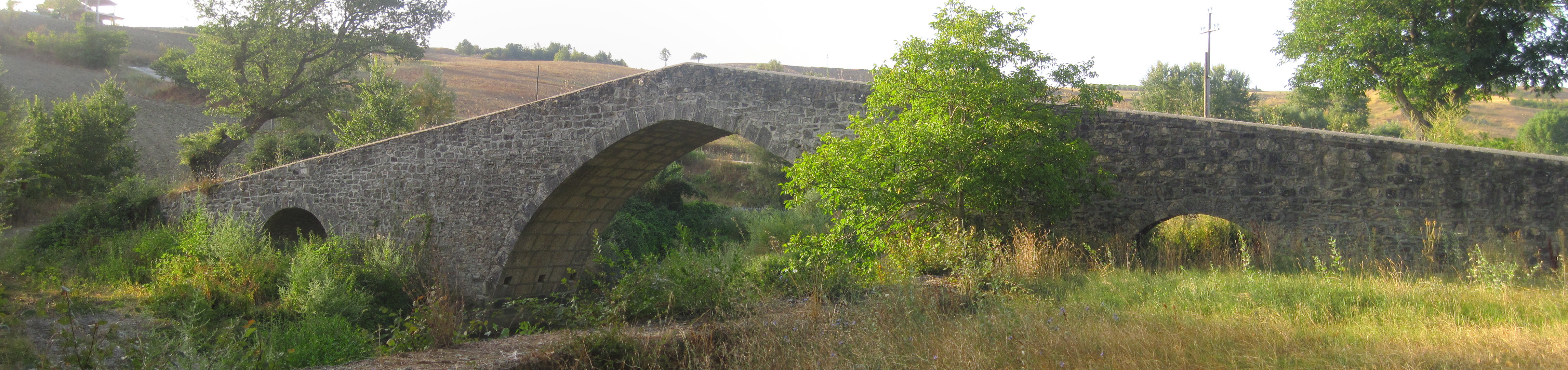
Each evening brought the problem of nighttime shelter. Those who could — cheesemakers and mule handlers — sought refuge under bridges, in roadside chapels, in natural shelters, or in homes along the route. It should be remembered that the path followed was generally the same year after year, fostering the development of relationships and customs along the tratturo. The situation of the shepherds was quite different: they were forced to sleep beside the flock to protect it from wolves and bandits. Along the tratturi, there were also inns located at regular intervals, but these were reserved for locati, messengers, and gentlemen — in short, for those who could afford them.
The diet of those engaged in transhumance was extremely poor. At departure, they had some provisions brought from home; after the first few days, they lived almost exclusively on dairy products from their own flock and whatever they could barter in villages near the tratturo. Meat was rare, consumed only if an animal was seriously injured; even then, most of it was sold to limit economic losses.
If a sheep gave birth along the journey, there were only two possibilities: if the mules were nearby, the lambs were loaded onto them; otherwise, the shepherds had to carry them on their shoulders.
It was exhausting work, in exchange for unfairly low pay. Upon returning to Abruzzo, the shepherds brought home barely enough to support their families, after having lived away from them for six months. Life became only slightly easier after returning: the sheep still had to be guarded and defended, and the shepherds moved to mountain pastures far from the villages, where they remained for at least a couple of weeks before being relieved.
Since this way of life often began before the age of ten, shepherds were effectively denied access to education. Given that a large part of the population of mountainous Abruzzo was engaged in pastoralism, this significantly contributed to the cultural backwardness of those regions, deprived of genuine opportunities for development. While the rest of Italy progressed, inland Abruzzo remained anchored to centuries-old economic practices. These considerations were central to the arguments advanced by Melchiorre Delfico and those who supported the abolition of the Dogana di Foggia and the Doganella d’Abruzzo.
 |